Genre music venue selection rules: Capacity management tips
"The environment of a performance creates the soul of the sound, turning a simple melody into a shared cultural moment."
Selecting the right venue for different musical styles is essential to ensure the sound reaches the audience effectively and the atmosphere supports the intended emotion. This guide explores how genre music venue selection rules vary based on acoustic needs and cultural roles.
Key takeaways include understanding the distinction between specialized traditional spaces and large-scale festival environments, the importance of capacity management, and the necessity of managing environmental impact at large events.
How does genre music venue selection rules change for different styles?

At sunset, the sound engineer presses a heavy button in the dark hall to adjust the acoustics for a specific genre.
A sound engineer adjusts the sliders on a mixing console to balance the heavy bass of electronic music against the delicate pluck of a string instrument. Different genres require specific acoustic properties to maintain their integrity.
For example, electronic music often relies on high-fidelity sound systems in large-scale festival settings to create an immersive experience.
In contrast, traditional music often requires specialized spaces to preserve historical authenticity.
This creates a sharp distinction between the massive scale of modern festivals and the intimate, controlled environments of traditional halls.
The role of the space changes significantly when moving from a quiet concert hall to a massive outdoor festival. While a hall focuses on sound projection, a festival focuses on crowd management and energy. This shift in venue choice determines how the music is felt by the attendees.
- Identify the core acoustic requirements of the genre.
- Match the venue's capacity to the expected fan base size.
- Evaluate the stage layout for specific instrument setups.
What are the criteria for K music venue choice guide?
A festival organizer walks through a massive field, marking out boundaries for stages and walkways to accommodate thousands of people. When planning for large-scale events, capacity and logistics become the primary drivers of venue choice.

This is reflected in the massive growth seen in large-scale gatherings, such as how festival attendance at the Electric Daisy Carnival (EDC) increased by 39.1%, or 90,000 attendees from 2011 to 2012.
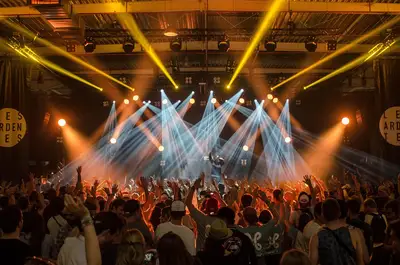
For modern K-pop or electronic music, the venue must accommodate massive crowds while maintaining visibility. This requires wide-open spaces or large arenas. Such large-scale planning is a core part of the K music venue choice guide to ensure safety and visibility.
The scale of the venue must match the projected attendance to avoid overcrowding or empty-sounding halls. Choosing a space that is too large for a niche genre can kill the intimacy, while a space too small creates safety risks. This balance is the foundation of effective venue selection.
In this sequence, the first step is the most critical.
How do music genre performance sites impact the atmosphere?
At midnight, the crowd feels the heavy bass vibrate through their chests within the dimly lit hall, shifting the energy of the chosen genre.
A lighting technician tests the strobe lights in a dark room to ensure they hit the right rhythm for the dance floor. The physical environment of a music genre performance sites significantly shapes how the audience interacts with the music.
For high-energy genres like rave or rock, the venue often serves as a backdrop for movement and social interaction.

In these settings, the venue is not just a room but a participant in the culture. The sense of community is built through the shared space. This creates a sense of collective identity among the attendees.
For more contemplative genres, the venue acts as a silent partner to the performer. The acoustics must be perfect to capture the nuances of the sound. This creates a different kind of engagement, where the audience is focused on listening rather than movement.
What are the specific venue selection by music type requirements?
A stagehand moves heavy equipment across a polished wooden floor, preparing for a classical performance. Different musical types demand different technical setups. For instance, rock or electronic music might require heavy-duty power supplies and reinforced floors for large speaker stacks.
Traditional or classical music relies heavily on the natural acoustics of the room. This creates a different set of requirements for soundproofing and reverberation control. This distinction is a vital part of the venue selection by music type requirements.
| Feature | Large Festival/Electronic | Traditional/Classical Hall |
|---|---|---|
| Primary Focus | High-volume sound & movement | Acoustic precision & intimacy |
| Capacity Needs | High-density crowd management | Controlled seating arrangements |
I remember seeing how a massive speaker setup could shake the very floor of a venue, changing the entire physical experience of the music. This comparison shows how the physical structure of a space must accommodate the energy of the genre.
How do we manage the environmental impact of music venues?

A cleanup crew gathers plastic waste after a large outdoor concert to prepare the site for the next day. Large-scale music events generate significant amounts of waste, making environmental management a critical part of venue operations.
This is especially true for outdoor festivals where the footprint is much larger.
In South Korea, waste management is strictly regulated. The waste disposal fees of 10 ~ 30 won/kg of landfill or incinerated waste are charged to the municipalities and businesses unless they are 'recyclable resources' which are not environmentally harmful.
This creates a financial incentive for venues to manage waste properly.
To maintain sustainable operations, organizers can follow these steps:
- Implement strict sorting stations for recyclable materials to avoid high disposal fees. 2. Encourage attendees to use reusable items to minimize single-use waste. 3. Coordinate with local municipalities to ensure proper disposal of non-recyclable materials.
A final check of the site ensures that all waste is properly categorized to avoid penalties. This process is essential for maintaining the relationship between the event and the local community.
What are the limitations of venue selection?

A venue manager looks at a contract, noting the specific restrictions on noise levels and late-night operations. While choosing the perfect space is ideal, real-world constraints often dictate the final decision.
These constraints can include local noise ordinances, capacity limits, or budget restrictions.
One major limitation is the environmental impact of non-recyclable materials.
For example, citizens are discouraged to use plastic bags by businesses offering paper bags instead, with non-compliant businesses charged 300,000 won (Indeed, plastic bags are not considered as a recycling material in South Korea).
This type of regulation can limit the types of promotional materials or supplies a venue can use.
Another limitation is the inherent difficulty in managing massive crowds in outdoor settings. While large numbers increase revenue, they also increase the complexity of safety and waste management. These factors must be weighed against the musical goals of the event.
Related







Comments 0