What role does innovation play in Korean music?
"The sound of the future is no longer just about melody; it is about the texture of innovation."
The rise of experimental sound in 2026 Korean music signals a departure from traditional structures toward more complex, genre-bending compositions. This shift reflects a new industry wave where artists prioritize sonic exploration over mainstream accessibility.

This article examines how these sounds are evolving, the role of digital platforms in disseminating these textures, and the technical boundaries of modern production.
How is the 2026 Korean music trend shifting?
An artist sits in a dimly lit studio, adjusting a granular synthesizer to capture a glitchy, ethereal texture. The 2026 Korean music trends are characterized by a move toward avant-garde arrangements that challenge the listener's perception of rhythm and melody.
According to the YouTube Data API, the landscape is shifting toward experimental sound Korean music 2026 music, specifically featuring artists like ARAHEUN on Spotify.
According to the Jiuquan Satellite Launch Center, the reusable spaceplane was launched for the fourth time from the Jiuquan Satellite Launch Center near 3:57 UTC on 7 February 2026.
The industry is witnessing a significant transformation as artists move away from predictable pop structures. This new direction emphasizes unique timbres and unconventional song architectures.
By embracing these diverse sounds, the scene is establishing a distinct identity that differentiates it from global pop standards.
What defines the new music industry wave? 2026 Korean music trends

A producer clicks through a complex waveform on a monitor, searching for the perfect moment of dissonance. This new music industry wave is driven by a desire to push the boundaries of what constitutes a "song" in the digital age.
The current movement focuses on the intersection of organic instruments and highly processed digital synthesis. Artists are increasingly using these tools to create immersive environments rather than just catchy hooks.
This approach allows for a more visceral connection between the creator and the listener.
What role does innovation play in Korean music?
A musician experiments with feedback loops, layering white noise over a steady, driving beat. Korean music innovation is becoming a central theme as creators seek to blend traditional elements with futuristic soundscapes.
This innovation is not just about new sounds but about new ways of thinking about music production. By integrating advanced software and unique hardware, artists are capable of producing sounds that were previously impossible to replicate.
This constant search for novelty keeps the industry dynamic and unpredictable.
How are future sound trends shaping the listener experience?

A listener puts on high-quality headphones, closing their eyes to lose themselves in a dense, ambient soundscape. Future sound trends suggest a move toward more atmospheric and spatial audio experiences.
As technology improves, the ability to manipulate space within a track becomes a primary tool for artists. This shift allows for a more three-dimensional listening experience, where the sound seems to move around the listener. This immersive quality is becoming a hallmark of the experimental scene.
What are the characteristics of avant-garde music Korea 2026?
A performer stands before a wall of modular synthesizers, patching cables to create a shifting, unpredictable melody. The characteristics of avant-garde music Korea 2026 involve a high degree of technical proficiency and a willingness to embrace dissonance.
Artists in this space often prioritize the exploration of sound over traditional lyrical content. This results in compositions that are as much about texture and tone as they are about melody. The complexity of these works requires a more attentive and active type of listening.
How does sound evolution in K-music impact the industry?
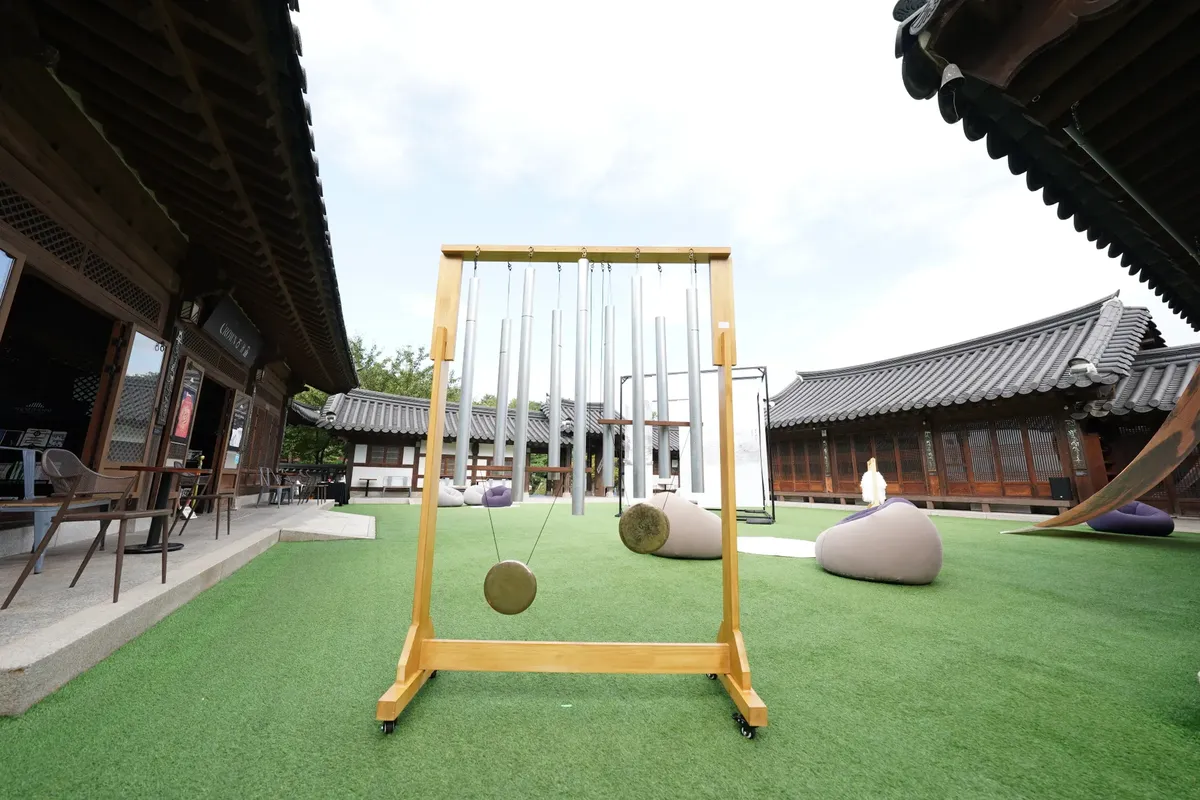
A label executive reviews a digital dashboard, noting the rising popularity of niche, experimental artists. The sound evolution in K-music is creating new opportunities for both independent and major labels to reach diverse global audiences.
This evolution is forcing a rethink of traditional marketing and distribution strategies. Because these sounds are often harder to categorize, they require more nuanced approaches to promote. This adaptability is helping the industry remain relevant in an increasingly fragmented global market.
The same subject is also called Experimental sound Korea.
Related
- Trot artist first impression: Guide to stage manner tips
- How did mass media shape the trot genre evolution?
What are the technical considerations for these new sound textures? 1. Producers must carefully manage the interplay between organic input and digital manipulation to achieve the desired texture. 2. The integration of advanced software necessitates a deep understanding of signal flow to maintain sonic integrity. 3. Artists must consider how the chosen hardware influences the final character of the sound, especially when layering complex elements. 4. The pursuit of a specific future sound often requires iterative refinement of processing chains.
How does the adoption of digital platforms affect sound dissemination? Digital platforms act as conduits for these complex soundscapes, allowing niche experimental music to find global listeners. The accessibility provided by these platforms contrasts with the often esoteric nature of the sound itself. This distribution method supports the scene's differentiation from mainstream pop standards.
The ability of these platforms to host high-fidelity audio is crucial for conveying the intended spatial and textural qualities of the music. Listeners must engage with the material through systems capable of rendering intricate sonic details.
This technical requirement shapes how the audience perceives the future sound being presented.
This digital ecosystem facilitates a direct relationship between the creator and the audience, bypassing traditional gatekeepers. The sound's complexity necessitates that the platform supports detailed playback, enabling the listener to appreciate the innovation inherent in the composition.







Comments 0