Deep Dive: 'Zoo' Captures Aging Through Poetic Folk Music
"The music wasn't just a sound; it was a mirror reflecting the quiet tragedies of growing up."
Kim Kwang-seok's 'Zoo' is not merely a song about animals or a physical location; it is a profound meditation on the human condition, capturing the bittersweet realization that life moves forward even when we feel stationary.
* 'Zoo' serves as a poignant allegory for aging and the inevitable acceptance of life's cyclical nature. * Kim Kwang-seok’s blend of acoustic instrumentation and lyrical simplicity defined the gold standard for Korean Folk music. * The narrative structure explores the feeling of being an observer—a visitor to one's own life. * The track remains a crucial bridge between traditional balladry and modern acoustic sensibilities.

Why does 'Zoo' feel like a timeless anthem of modern melancholy?
At midnight in a silent suburb, a lone traveler sits on a cold bench and watches the distant crowd through a glass partition.
At 11:45 PM in a quiet Seoul suburb, the streetlamp flickers over a deserted intersection. The shadows stretch long across the pavement, looking like the iron bars of a cage.
A traveler sits on a cold park bench, watching the world move through a glass partition. They feel both connected to the distant crowd and completely isolated from it.
The lyrics of 'zoos' use the imagery of cages, glass, and predictable routines to transcend a literal setting. These represent the structures of human existence.
The vibrancy of the memories described in the song contrasts sharply with the stillness of the present. This creates a sense of living in the past while breathing in the present.
This duality captures the universal feeling of watching life pass by without intervention. It is the sensation of being a spectator to one's own journey.
The musical structure is built on deliberate pacing and restraint. Unlike the explosive crescendos of modern pop, 'Zoo' relies on a slow-burn emotional tension.
The arrangement builds gradually, mirroring the way human realization often creeps in. It happens slowly, then all at once, before providing a quiet, cathartic release.
But the emotional weight isn't just in the words; it is in the very air of the recording.

How do we deconstruct the sound of Kim Kwang-seok’s musical DNA?
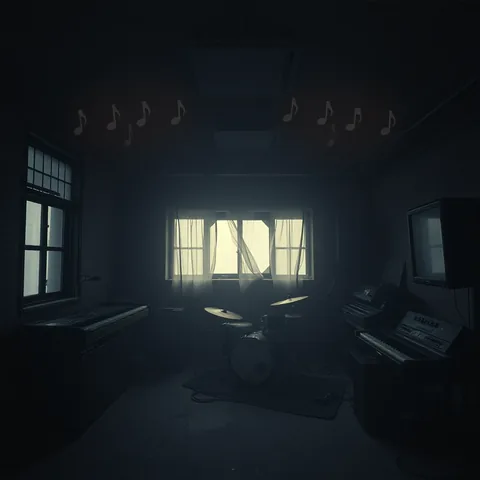
In a dimly lit studio in the late 1990s, a single acoustic guitar rings out. The sound of fingers sliding against steel strings provides a percussive, organic heartbeat.
The singer leans into the microphone, his breath audible. He turns a simple melody into an intimate conversation.
Kim Kwang-seok's vocal delivery is characterized by a unique texture. It balances raw vulnerability with a seasoned, almost weary wisdom.
His mastery of breath control allows him to shift dynamically between a delicate whisper and a resonant, grounded tone. This makes the listener feel as though they are sitting in the room with him.
The instrumentation remains rooted in a classic acoustic palette. Specific guitar tunings and subtle bass lines provide a grounded, earthy foundation.
This differs from the polished, electronic-heavy pop of the 2020s. This acoustic-first approach ensured the emotional weight was never buried by production.
His ability to draw power from minimalism became his signature. It influenced generations of singer-songwriters to value substance over spectacle.
However, the true impact of this sound is best understood by looking at the world outside the studio.
Where does 'Zoo' sit in the broader landscape of Korean music?
The late 1990s and early 2000s in Korea were periods of intense economic transition. These years saw shifting social identities as the country moved toward the new millennium.
While the mainstream charts were often dominated by high-energy dance music, a quiet revolution was happening in the folk scene.
'Zoo' occupied a unique space during this era. While mainstream ballads often relied on grand gestures of heartbreak, Kim's work offered quiet introspection.
It moved away from the performer-audience divide. Instead, it established the "Singer-Songwriter" archetype—an artist who is a storyteller first and a celebrity second.
By bridging the gap between traditional folk and modern lyrical themes, the song helped elevate the genre.
It proved that music could be commercially successful without sacrificing emotional depth. This paved the way for the indie movements of the 2020s.
But the music does more than just reflect history; it reaches into the listener's own soul.
| Feature | Mainstream Pop/Ballad (Era-typical) | Kim Kwang-seok's Folk Style |
|---|---|---|
| Primary Focus | Catchy hooks and vocal gymnastics | Lyrical storytelling and emotional truth |
| Instrumentation | Synthesizers, heavy drums, polished production | Acoustic guitars, organic percussion, minimal layers |
| Emotional Tone | Often dramatic, externalized heartbreak | Introspective, quiet, and contemplative |
| Listener Connection | Immediate, high-energy engagement | Slow-burn, reflective, and lasting resonance |
Why does the emotional journey hit so hard for the listener?
A middle-aged man walks through a bustling market in 2025. He hears a faint melody from a distant shop that makes him stop mid-stride.
He realizes the song doesn't just remind him of his youth. It reminds him of the person he useds to be before the world changed him.
The relatability of 'Zoo' stems from its connection to universal life stages. For the older generation, it is a nod to nostalgia; for the younger, it is a haunting foreshadowing of adulthood.
The "Zoo" metaphor itself is a complex puzzle. Is it a prison of social expectations, a sanctuary of safe routines, or a memory box for our wilder selves?
The consensus among listeners is often that the zoo represents the safe, enclosed life we build for ourselves. It is a place where we are observed but ultimately contained.
The song's power lies in its refusal to provide easy answers. It leaves the listener to decide whether the zoo is a place of comfort or a place of confinement.
When I first listened to these tracks as a student, I thought they were just sad songs. I realized later they were maps for surviving adulthood.

How do you appreciate the legacy of Korean folk?
To truly understand the impact of artists like Kim Kwang-seok, one must look beyond the hits. You have to examine the craft of the songwriting itself.
Here is a step-by-step approach to engaging with this genre:
- Listen to the breathing: Pay attention to the space between the notes. In folk, silence is as much an instrument as the guitar.
- much as the melody, the breath tells the story.
- Analyze the metaphor: Look for the "hidden" meaning in lyrics. See how a simple setting like a zoo can represent complex human emotions.
- Compare versions: Listen to live recordings versus studio recordings. See how the energy of a room changes the emotional weight.
- Contextualize the era: Research the social and economic climate of the release year. This helps you understand the "mood" of the music.
- Seek the acoustic roots: Explore the history of the folk movement. See how Western influences merged with Korean poetic traditions.
Note that this deep dive requires patience. This style of music is not designed for background noise or quick consumption.




Comments 0